

Through DONATIONS
Make a big impact
Land purchases
More space for vibrant forest
Donations for land purchases
If you want to plant trees, you have to buy land
The creation of a living corridor is a unique task. But only after purchasing land can we lay the foundation for a new rainforest there. Your donations for land purchases are therefore just as important as donations for planting rainforest trees!
The beauty of our vision lies in a seamless rainforest stretching from the majestic Pacific coast to the majestic hills of Fila Cruces.
But before we can plant trees, we must first acquire the land. This is where your support comes in to expand the COBIGA Biological Corridor. Your participation is a valuable contribution to protecting precious biodiversity and our fight against climate change. Donation certificates for land purchases can be acquired for as little as €22.50.
Reforestation
Climate and nature protection in one go
Donations for tree plantings
CO2 sequestration and nature conservation go hand in hand
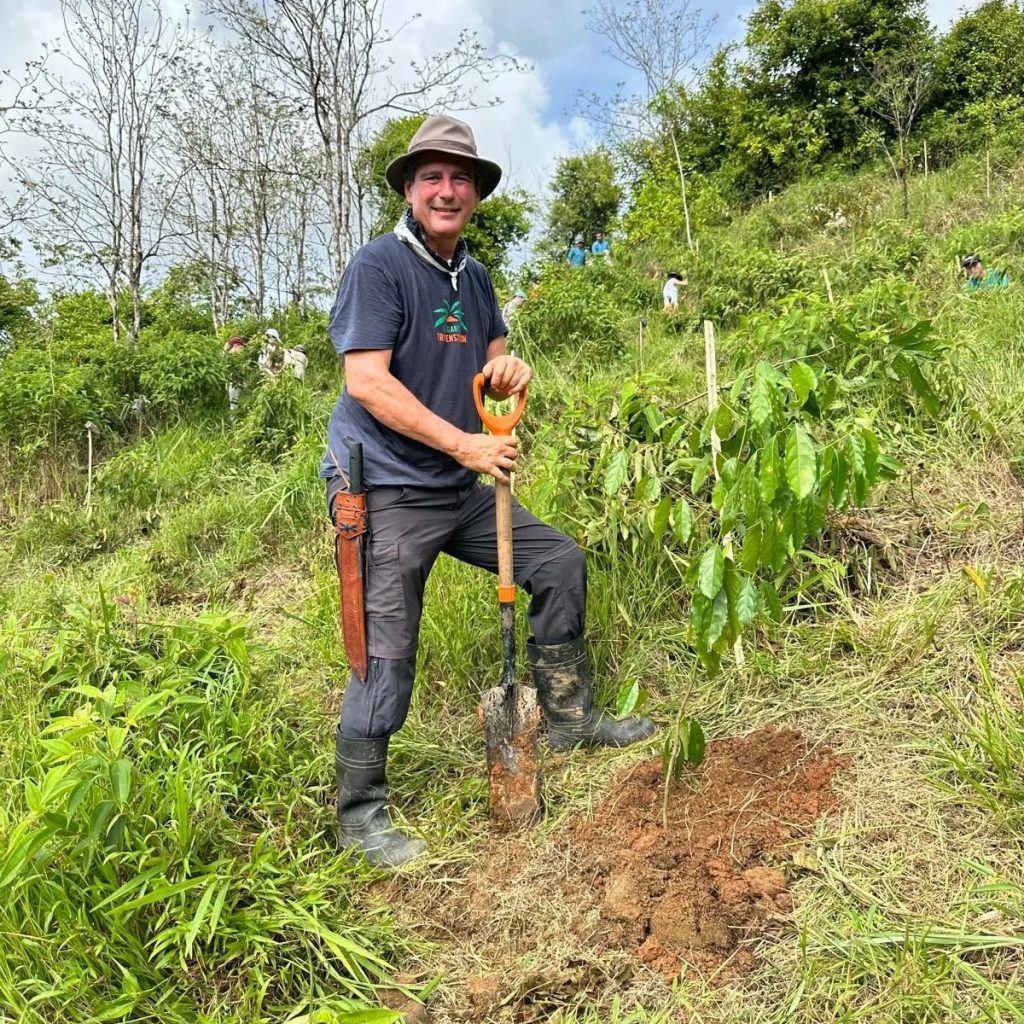
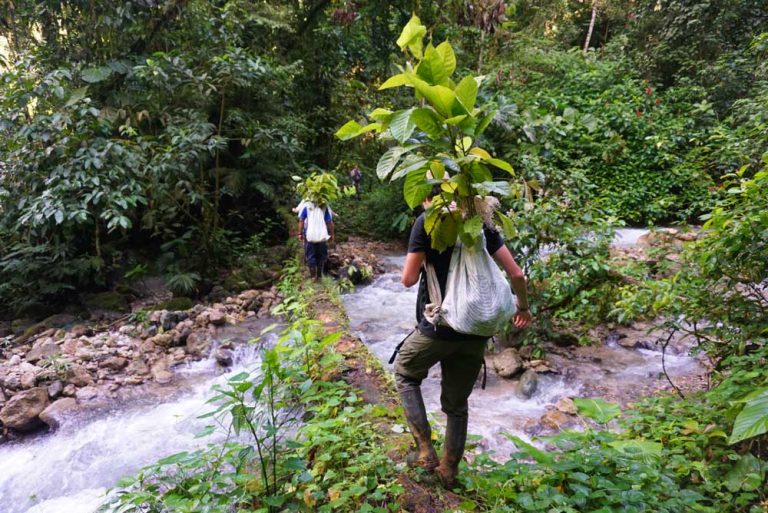
On purchased former pasture and fallow land, up to 800 trees per hectare from up to 200 species are planted using selected tree species. A tree removes 700 kg of CO2 from the Earth’s atmosphere during its lifetime and costs €21.
In Austria, the average per capita emission is about 8 tons per year. By purchasing 12 to 15 trees annually, you practically live CO2 -neutral and simultaneously make an important contribution to preserving biodiversity in the rainforest.
At the same time, new habitats are created, which are quickly adopted and settled by other animals and plants.
Climate Protection
For a stable future
Climate protection concerns us all
Climate protection costs money
Climate protection is the umbrella term for measures intended to counteract human-caused global warming and mitigate or prevent its potential consequences. The two-degree limit is considered an important threshold that must not be exceeded if catastrophic effects of global warming are to be avoided. Preventing dangerous climate change is considered one of the greatest challenges of human civilization.
Our aim is to counteract global climate change by purchasing land and re-naturalizing it through reforestation.
Since 2006, the La Gamba Tropical Station has been managing the COBIGA project. Donations to the Regenwald der Österreicher association are forwarded to the tropical station for specific purposes. We receive an annual report on the use of the donations.
Species Protection
Our heartfelt concern
Protecting biodiversity
How we protect the inhabitants in and around the rainforest
The Piedras Blancas National Park (also known as the Rainforest of the Austrians) in Costa Rica is considered a biodiversity hotspot. Numerous animal species listed as endangered on the IUCN and CITES Red Lists live here: including jaguar, ocelot, puma, four monkey species, anteater, tapir, armadillo, endemic bird species, as well as many reptile and amphibian species. However, this unique wildlife cannot be preserved solely through the purchase of land or reforestation. Park rangers are also necessary to protect the rainforest from illegal logging, poaching, land occupation, gold panning, and the trade in animals and furs. Additionally, reintroduction programs contribute to securing endangered species in the long term.
Since 2003, our association has paid the salaries of the park rangers employed by the National Park Administration in Piedras Blancas National Park. A special highlight of our work is the successful reintroduction of the Scarlet Macaw, which we initiated and financed – today, a stable population once again lives in the Esquinas Rainforest. Furthermore, we have supported the organizations Pro Felis, Yaguará, and Osa Conservation in their projects to protect endangered wild cats.
Another focus is species protection on the Pacific coast: Together with the Fundación Corcovado, we have been committed to the protection of sea turtles for several years. This project combines active species protection with environmental education and helps to secure the nesting sites of the Olive Ridley sea turtle (Lepidochelys olivacea) and inspire the local population to preserve coastal ecosystems.
In total, with the help of donations, we have so far provided more than €350,000 for species protection in the rainforest.
With the support of these measures, the preservation of species and ecosystems is possible.